
Brigadier General Akil Hashem
Sunday, 16 September 2012
بانوراما العربية سورية التشكيلات العسكرية ومساعي التوحيد العميد المتقاعد عقيل هاشم 06 09 2012
بانوراماالعربية سورية التشكيلات العسكرية ومساعي التوحيد العميد المتقاعد عقيل هاشم
06 09 2012
Retired Syrian General Akil Hashem discusses the Free Syrian Army unifications and tactics.
AlArabieyh/Panorama 9-6-2012


Saturday, 4 August 2012
Retired General Akil Hashem on the Situation Room with CNN's Brian Todd
Retired General Akil Hashem on the Situation Room with CNN's Brian Todd
8-3-2012
Friday, 3 August 2012
Retired Syrian General Akil Hashem discusses the battle for Aleppo and says "NO ALQAEDA in Syria on CNN International
Retired Syrian General Akil Hashem discusses the battle for #Aleppo and says "NO ALQAEDA in #Syria " with Christiane Amanpour on CNN Inetrnational 8-2-2012
http://amanpour.blogs.cnn.com/2012/08/03/retired-syrian-general-on-the-battle-for-aleppo/

http://amanpour.blogs.cnn.com/2012/08/03/retired-syrian-general-on-the-battle-for-aleppo/

Tuesday, 31 July 2012
إبني العميد الركن عقيل هاشم ( إسماعيل وإياد هاشم ) يرفعان علم الثورة السورية على برج إيفل في باريس 7-27-2012
<<< إبني العميد الركن عقيل هاشم ( إسماعيل وإياد هاشم ) .يرفعان علم الثورة السورية على برج إيفل في باريس ، اسماعيل يعيش في فرنسا أما إياد فقد ترك عمله في فيلادلفيا وسافر إلى باريس يوم أمس للإشتراك بهذا العمل الجرئء ، وقد تم إعتقالهما من قبل البوليس الفرنسي ثم أفرج عنهما بعد ثماني ساعات
وضع علم كبير للثورة السورية ظهر يوم الجمعة7-27-2012 على برج إيفل، أبرز المعالم السياحية في باريس "للفت نظر العالم إلى الوضع في سوريا". فقد توجهت مجموعة صغيرة من ناشطي هيئة "فرنسا سوريا ديمقراطية" إلى هذا البرج الذي تجرى فيه تصليحات. وارتقى ناشطان هما نجلا الضابط السوري المتقاعد عقيل هاشم الذي يعيش في الولايات المتحدة، على سلمين وأفردا العلم الكبير على مرأى من السائحين الذين صفقوا لهما لدى نزولهما. وقد توتر الوضع لحظات عندما أراد حراس البرج نزع العلم. من جهة أخرى، كتب المتظاهران على لافتة "21 ألف قتيل و65 ألف مفقود ومليونا مهجر.. هذه هي الإصلاحات الإجرامية التي وعد بها بشار الأسد". وقال الناشط إبراهيم وتي لوكالة الصحافة الفرنسية إن "برج إيفل هو رمز فرنسا.. جئنا إلى هذا المكان الذي تؤمه أعداد كبيرة من السائحين، حتى نلفت نظر العالم إلى ما يجري في سوريا".
Two Syrian opposition activists unfurled an enormous rebel flag at the base of the Eiffel Tower in Paris on Friday and were arrested by police.
As a handful of supporters from the France Syria Democracy group rallied below, the two activists climbed scaffolding set up for maintenance works and released the flag, to applause from tourists gathered below.
The two activists, Ismael and Iyad Hashem -- sons of retired Syrian brigadier general Akil Hashem who lives in the United States -- were arrested after climbing down, following a complaint from the site’s management, police said.
“The Eiffel Tower is the symbol of France. We came here because there are a lot of tourists and we want to attract the entire world's attention to what is happening in Syria,” said one of the activists, Ibrahim Wetti.
The flag they unfurled was the one adopted in 1946 after Syria first gained independence, which was later replaced by the country's Baathist regime.


Related Articles:
http://english.alarabiya.net/articles/2012/07/27/228759.html
http://en.ria.ru/world/20120727/174812436.html
http://www.aljazeera.net/news/pages/c8d0372a-e617-4034-8522-66449772a650?GoogleStatID=9#.UBLgGi-z3Zs.facebook.html
http://paris-ile-de-france.france3.fr/2012/07/27/un-drapeau-syrien-en-guise-de-soutien-accroche-sous-la-tour-eiffel-60541.html


Related Articles:
http://english.alarabiya.net/articles/2012/07/27/228759.html
http://en.ria.ru/world/20120727/174812436.html
http://www.aljazeera.net/news/pages/c8d0372a-e617-4034-8522-66449772a650?GoogleStatID=9#.UBLgGi-z3Zs.facebook.html
http://paris-ile-de-france.france3.fr/2012/07/27/un-drapeau-syrien-en-guise-de-soutien-accroche-sous-la-tour-eiffel-60541.html
Wednesday, 25 July 2012
Will Syria Use It's Chemical Weapons?? Ret Brigader General Akil Hashem on CNN Live with Soledad O'Brien 7-25-2012
Will Syria Use It's Chemical Weapons?? Ret Brigader General Akil Hashem on CNN Live with Soledad O'Brien 7-25-2012
Retired Syrian Brigadier General Akil Hashem talks about Syria's Chemical Weapons
Voice Of America
News / Middle East
Syrian Brigadier General Akil Hashem retired after 27 years of military service believes the international community - including Israel - has very little to worry about. He says he can speak with certainty about Syria’s chemical weapons program up to the beginning of 2011.
Experts: Syria Not Likely to Use Chemical Weapons
Cecily Hilleary /Voice Of America
 Syria's Foreign Ministry Spokesman Jihad Makdissi speaks during a news conference in Damascus July 23, 2012.
 Retired Syrian Brigadier General Akil Hashem
News / Middle East
Syrian Brigadier General Akil Hashem retired after 27 years of military service believes the international community - including Israel - has very little to worry about. He says he can speak with certainty about Syria’s chemical weapons program up to the beginning of 2011.
Experts: Syria Not Likely to Use Chemical Weapons
Cecily Hilleary /Voice Of America
July 25, 2012

Syria appears to be backtracking on hints it may have biological and chemical weapons (BCW) capability, following comments by a Foreign Ministry spokesman. The spokesman, Jihad Makdissi, told reporters Monday that Syria would not hesitate to use unconventional weapons against “external aggression,” but promised that Damascus would never use these weapons against its own citizens. His statement came a day after Israeli Prime Minister Benjamin Netanyahu expressed concern that Syria’s chemical weapons could fall into the hands of Israel’s enemies.
All of these types of weapons are in storage and under security and the direct supervision of the Syrian armed forces and will never be used unless Syria is exposed to external aggression.
In a direct exchange with VOA on Facebook shortly after his comments, Jihad Makdissi sought to clarify his remarks, “As I explained, any unconventional weapons - if they exist, since I am responding only to false allegations on having them - would never ever be used against anyone inside the country or any civilians during the current painful crisis in Syria, no matter how the crisis evolves,” Makdissi wrote to VOA.
Later on Monday, Syria’s Foreign Ministry issued a statement, saying, "When the Foreign Ministry spokesman says that Syria will not use chemical weapons against its people… this doesn't mean that Syria has such weapons in the first place." The Ministry accused international media of making too much of Makdissi’s statement, which it says came in response to what Syria says is an international media campaign falsely accusing Syria of having weapons of mass destruction, or WMDs, as a pretext for invasion.
This is not the first time Syria has implied that it has a BCW program. After Libya’s Moammar Gadhafi agreed to dismantle his weapons of mass destruction program in 2003, the U.S. and Britain stepped up pressure on the Syrian President to do the same. In response, Bashar al-Assad told London’s Telegraph that Syria had a right to defend itself by acquiring chemical and biological weapons and that Syria would not destroy any such weapons program unless Israel agreed to halt its nuclear program.
Later on Monday, Syria’s Foreign Ministry issued a statement, saying, "When the Foreign Ministry spokesman says that Syria will not use chemical weapons against its people… this doesn't mean that Syria has such weapons in the first place." The Ministry accused international media of making too much of Makdissi’s statement, which it says came in response to what Syria says is an international media campaign falsely accusing Syria of having weapons of mass destruction, or WMDs, as a pretext for invasion.
This is not the first time Syria has implied that it has a BCW program. After Libya’s Moammar Gadhafi agreed to dismantle his weapons of mass destruction program in 2003, the U.S. and Britain stepped up pressure on the Syrian President to do the same. In response, Bashar al-Assad told London’s Telegraph that Syria had a right to defend itself by acquiring chemical and biological weapons and that Syria would not destroy any such weapons program unless Israel agreed to halt its nuclear program.
It is natural for us to look for means to defend ourselves. It is not difficult to get most of these weapons anywhere in the world and they can be obtained at any time.
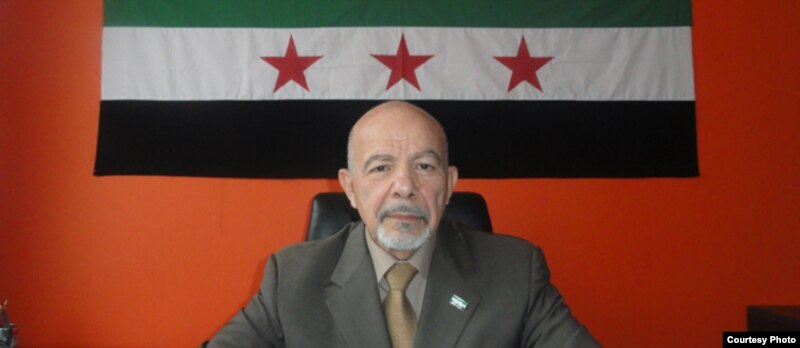
Syrian Brigadier General Akil Hashem retired after 27 years of military service and now lives in exile outside of Syria. He believes the international community - including Israel - has very little to worry about. He says he can speak with certainty about Syria’s chemical weapons program up to the beginning of 2011.
“It was primitive. But after that, I don’t know, and nobody else knows, not even the CIA, what might have happened,” Hashem said. “If Iran, in the past year and a half, provided Syrians with chemical weapons components, with experts, with equipment, with technology, this might change my assessment of the quality of this program.”
That said, Hashem said he does not believe Syria would actually use these weapons against Israel. It does not have any reason to do so, says Hashem, because Israel would not be a partner to any Western intervention in Syria. Further, he says that because Israel is superior in power to any other country in the region, it could easily counter an unconventional weapons attack by Syria almost as soon as it began.
Some Middle East analysts have expressed concern about what might happen if Syria’s suspected chemical or biological weapons were to fall into opposition hands. General Hashem says that the opposition has promised to protect and maintain any locations over which it gains control. He says he has no doubts that Syria may face even darker days following the fall of the regime. But no matter what the Syrian people suffer, he says, nothing could be darker than life under the regime of Bashar al-Assad.
“It was primitive. But after that, I don’t know, and nobody else knows, not even the CIA, what might have happened,” Hashem said. “If Iran, in the past year and a half, provided Syrians with chemical weapons components, with experts, with equipment, with technology, this might change my assessment of the quality of this program.”
That said, Hashem said he does not believe Syria would actually use these weapons against Israel. It does not have any reason to do so, says Hashem, because Israel would not be a partner to any Western intervention in Syria. Further, he says that because Israel is superior in power to any other country in the region, it could easily counter an unconventional weapons attack by Syria almost as soon as it began.
Some Middle East analysts have expressed concern about what might happen if Syria’s suspected chemical or biological weapons were to fall into opposition hands. General Hashem says that the opposition has promised to protect and maintain any locations over which it gains control. He says he has no doubts that Syria may face even darker days following the fall of the regime. But no matter what the Syrian people suffer, he says, nothing could be darker than life under the regime of Bashar al-Assad.
Sunday, 22 July 2012
Retired Brigadier General Akil Hashem discussing the recent developments in Syria, on MSNBC, UP with Chris Hayes
Retired Brigadier Syrian General Akil Hashem discussing the recent developments in Syria, and whether the International Community should intervene in Syria or not. UP with Chris Hayes Live show on MSNBC this Sunday, July 22 in the 9:00-10:00 am ET.

Retired Brigadier Syrian General Akil Hashem on MSNBC with Chris Hayes
Click here to watch the full interview:
http://www.msnbc.msn.com/id/46979738/vp/48275263#48275263